eMMC, UFS and SSDs all store data on NAND flash. What sets them apart is how they talk to the device. eMMC uses an older parallel bus that handles one task at a time, UFS uses a fast serial link that can read and write at once, and an NVMe SSD runs over PCIe with the most room for speed.
Below we compare all three, explain the new UFS 5.0 standard, and show which one fits which kind of product.
What Are eMMC, UFS and SSD?
All three are flash storage. The difference is the packaging and the link to the processor.
1. eMMC
eMMC puts the NAND and a simple controller in one small chip that's soldered to the board. It uses a parallel bus and is half duplex, so it either reads or writes at any moment, not both. The last version, eMMC 5.1, tops out at about 400MB/s on paper and has been the final release for years.
2. UFS
UFS also comes as a soldered chip, but it uses a fast serial link called M-PHY. It's full duplex and queues many commands at once, much like an SSD. Phones have moved through UFS 3.1, 4.0 and 4.1, and UFS 5.0 is next.
3. SSD
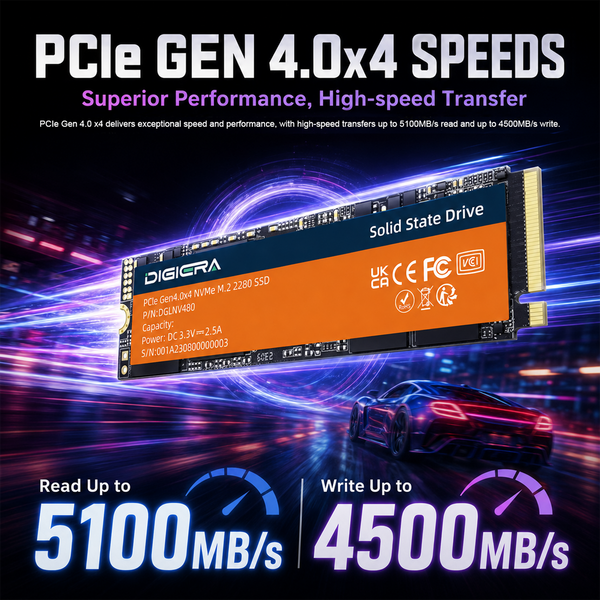
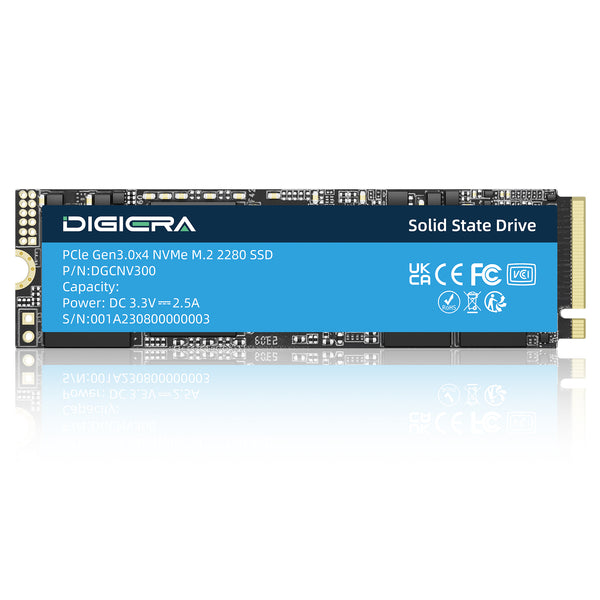
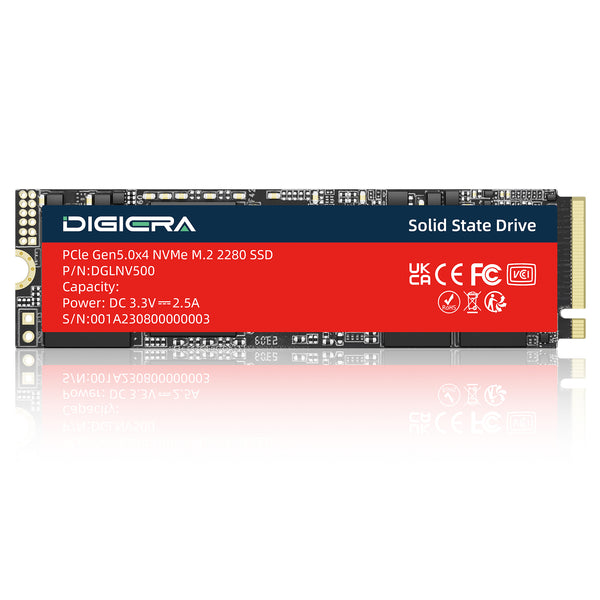
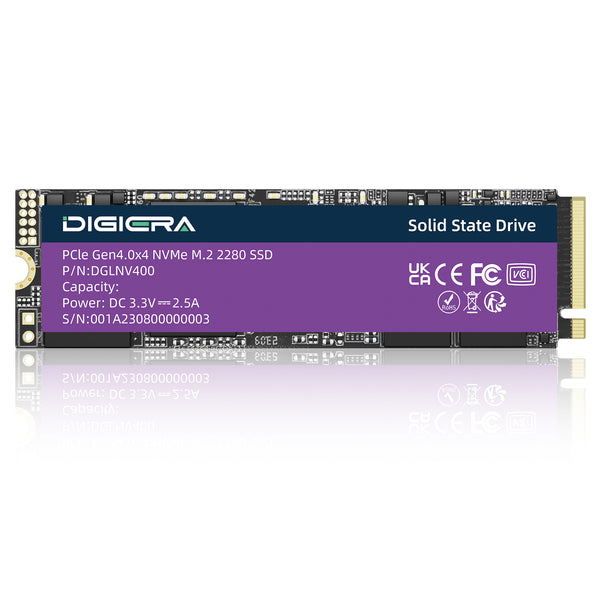
An SSD runs NVMe over PCIe and comes as an M.2 stick or a small BGA chip that can be soldered down. It has more NAND channels and more room for cooling than a phone chip.
eMMC vs UFS vs SSD: Key Differences
|
Feature
|
eMMC 5.1
|
UFS 4.x
|
NVMe SSD (PCIe 4.0)
|
|
Interface
|
Parallel bus
|
Serial M-PHY link
|
PCIe
|
|
Read and write at once
|
No
|
Yes
|
Yes
|
|
Sequential read
|
About 250 to 400MB/s
|
About 4,000MB/s and up
|
About 7,000MB/s
|
|
Random speed
|
Low
|
High
|
Highest
|
|
Package
|
Soldered chip
|
Soldered chip
|
M.2 stick or soldered BGA
|
|
Upgradeable
|
No
|
No
|
M.2: yes
|
|
Typical devices
|
Budget tablets, IoT, smart TVs
|
Phones, premium tablets, cars
|
Laptops, mini PCs, edge AI boxes
|
|
Relative cost
|
Lowest
|
Medium
|
Highest
|
UFS 4.x reads more than ten times faster than eMMC 5.1 in sequential tests. NVMe SSDs still lead, though the gap to UFS keeps shrinking.
Sequential vs Random Speed: What You Actually Feel
Specifications start with sequential speed, but in real life, that describes how fast a single large file loads. In daily use, you'll load apps, install updates, and switch between tasks, all of which involve thousands of small read/write operations.

This is where the eMMC device lags, as it handles only one request at a time, meaning that small requests will have to wait for their turn. UFS and SSD devices handle several requests at the same time, making them able to perform several operations at once.
UFS 5.0 and What Changes in 2026
JEDEC finished UFS 5.0 and published it in February 2026. According to JEDEC's UFS 5.0 announcement, it reaches up to 10.8 GB/s over two lanes, about double UFS 4.0. It also adds inline hashing for security and stays compatible with UFS 4.x hardware.
That puts phone storage in the same range as many PCIe 4.0 SSDs. Look out for the first UFS 5.0 phones and tablets coming soon in the next batch of releases, as AI capabilities will be the driving factor.
Endurance, Temperature and Industrial Grades
Because eMMC and UFS are soldered, a worn chip usually means a dead board. Endurance has to be planned at the design stage. Industrial eMMC and UFS parts can run in pSLC mode, storing one bit per cell for much higher write endurance at the cost of capacity.
Temperature matters too. Automotive and industrial grades are tested for wide ranges, often −40°C to 85°C or beyond, while consumer parts aren't. For always on devices that log data, pick the grade first and the capacity second.
Which One Should a Device Maker Choose?
It comes down to the product's price point, workload and expected life:
-
Budget tablets, smart TVs and simple IoT devices: eMMC still works, while supply lasts.
-
Phones and premium tablets need UFS for app speed and battery life.
-
Edge AI boxes, mini PCs and industrial PCs do better with a BGA or M.2 NVMe SSD.
-
Products with a long lifespan should opt for components that have a defined supply road map because eMMC is getting smaller.
-
Verify that the processor is capable of supporting the interface first, as many economical processors only support eMMC.

Board design, power budget and end of life notices all shape the choice as much as speed does. If your design calls for SSD storage, Digiera builds embedded SSDs for OEM projects at Digiera's production facility.
How to Check Which Storage Your Device Uses
Begin with the entire specs page. Those makers who use UFS would mention it, while the others don’t even mention it or write “storage.” Storage benchmark applications measure sequential and random speed, while teardown reviews identify the exact storage chip.
Check before you buy. Storage in phones, tablets and many Chromebooks is soldered, so you can't upgrade from eMMC to UFS later.
Sourcing Embedded Storage for OEM Projects
For a product line, lock the package, NAND, firmware and supply life on the bill of materials. Ask for end of life notice terms in writing, especially for eMMC. Send your capacity, form factor and endurance needs, and request a quote from Digiera.
FAQs
Is UFS better than eMMC?
Absolutely, almost in all cases. UFS accesses the drive and executes multiple tasks simultaneously, therefore making apps launch faster and updates install quicker. However, the usage of eMMC still remains relevant in case of budget electronics where costs come first.
How much faster is UFS compared to eMMC?
Very much faster. The sequential read/write speed of UFS 4.x is more than ten times higher compared to eMMC 5.1, and the difference is the same concerning random access speeds. UFS 5.0 is twice as fast as UFS 4.0.
Can I upgrade from eMMC to UFS?
Not really. Since both are soldered onto the motherboard, it’s necessary to ensure that the processor supports the particular protocol. In case of importance of fast storage speed, look at the product specification sheet.
Does UFS use more battery than eMMC?
Most often, it’s not like that. The thing is that UFS consumes more power when working actively; however, it performs the operation much quicker and returns to sleep mode.
Why do some phones still use eMMC?
The main reason is that it is cheaper, as many inexpensive processors can work with eMMC only. You will see it mainly in budget phones, tablets, smart TVs, and IoT devices.
What is UFS 5.0?
This is the latest version of the UFS technology which was launched in February 2026 after it was developed by JEDEC with data transfer speeds of up to 10.8 GB per second on two channels, double the speed of UFS 4.0.
Is UFS as fast as an SSD?
Not exactly. UFS 4.x is capable of delivering speeds of 4,000 MB/s, while PCIe 4.0 SSD is able to deliver 7,000 MB/s. UFS 5.0 with its 10.8 GB/s closes the gap significantly.
How do I check if my phone has eMMC or UFS?
Firstly, you should check your phone's full specification sheet or a tear-down review. Secondly, it is useful to run a storage benchmarking app since devices equipped with eMMC memory perform much worse in tests than devices with UFS.